A safe that won't open is stressful precisely because of what's inside. Anywhere in our Ventura County coverage area, we verify ownership, diagnose what failed, and open the safe, preserving it whenever the safe allows.
Every safe call starts the same way: prove it's yours. ID plus proof of ownership, or written authorization when you're acting for an estate or a business, before the safe is touched. That step is non-negotiable, and it's the reason a legitimate safe opening protects you rather than threatening everything the safe was bought to guard.
Then the diagnosis, because what failed decides how it opens. A forgotten dial combination, a dead keypad with a healthy lock behind it, bolt work jammed by a fired relocker or a failed handle. Each is a different path, and non-destructive comes first on all of them. Drilling is the last resort, done at a precise point chosen for your specific lock, and only after you've heard the why, the cost, and the repair plan. Once it is open, a new combination can be set in the same visit, which retires whatever code the safe came with.
The quote is firm, written, and comes before any work: brand, lock type, and failure mode vary too much for one honest published range. And vague "starting at" teasers on safe work are the classic setup for a price that doubles at the door. Tell the dispatcher the brand, the lock type, and exactly what the safe is doing; the more you can describe, the tighter the assessment. Our license verification guide shows how to vet anyone you're about to let near your safe.
Ventura County safe openings happen at your location: the safe never moves, whether it's bolted into a Camarillo closet or sitting in a Ventura stockroom.
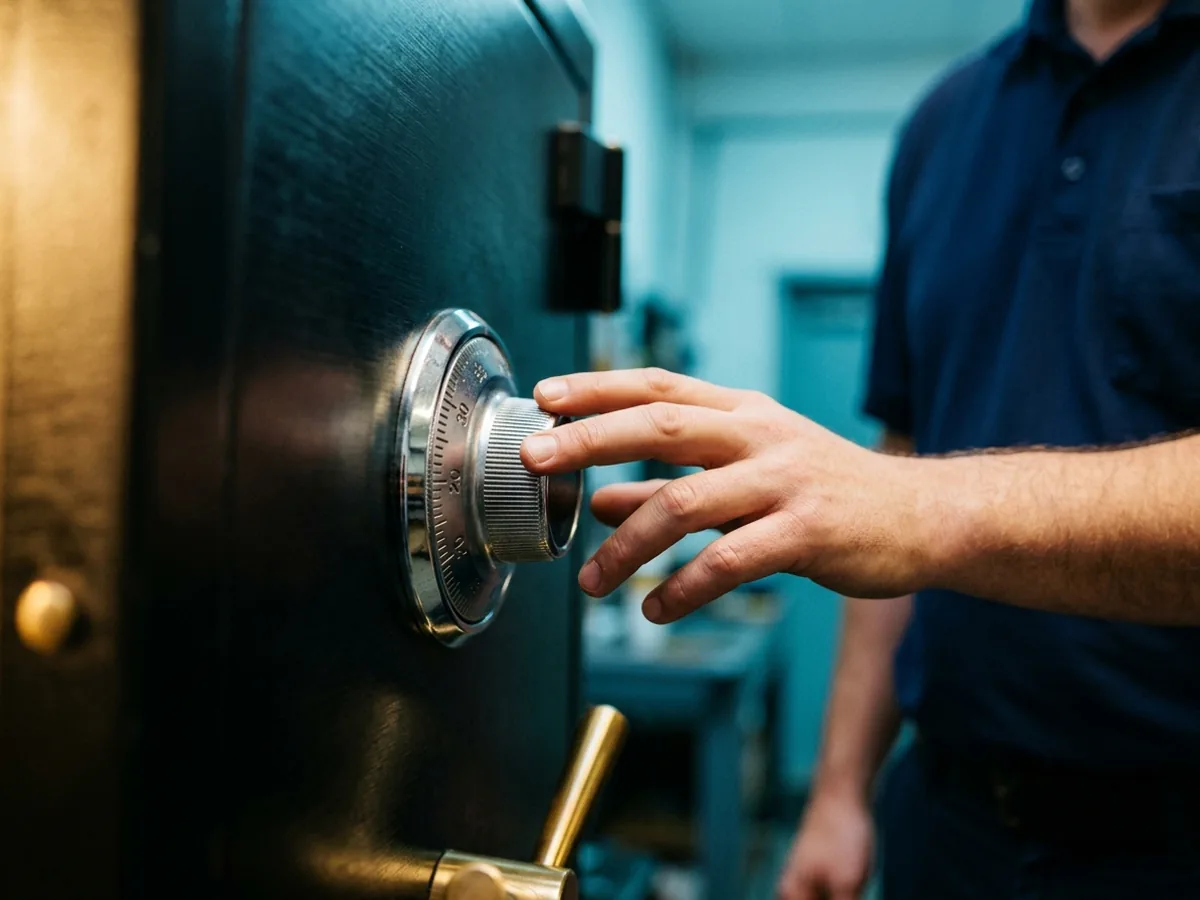
There is no safe price table on purpose; here is how the quote works instead.
Dial combinations and electronic codes reset for new owners or after staff changes.
Business lockouts, rekeying, master keys, and door hardware.
Helpful guides
Call the Ventura County line and describe the safe: brand, lock type, and what it's doing.